
Apply the codes to those outpatient charts? A quick guide to give you the basics!

Quick-start workflow (use this every case)
Identify the encounter type & roles
Professional coder (surgeon/anesthesiologist): CPT®/HCPCS for services + modifiers; ICD-10-CM for diagnoses.
Facility coder (ASC/HOPD): CPT/HCPCS for procedures/supplies + revenue codes; no ICD-10-PCS (that’s inpatient only).
Pull the right documentation
Op note (pre/post dx, indications, approach, body part(s), laterality, techniques, devices, complications).
Anesthesia record (ASA status, time, qualifying circumstances).
Pathology/endoscopy report if applicable.
Implants/device sheets.
Code diagnoses (ICD-10-CM)
Use post-op diagnosis if it’s more specific than pre-op.
Code the reason for surgery first. Add relevant comorbidities that affect care.
Code procedures (CPT/HCPCS)
Start with the primary procedure (greatest work/RVU), then secondaries if allowed.
Check NCCI edits and bundling rules before adding additional procedures.
Apply modifiers (CPT & HCPCS) as needed
Laterality, multiple procedures, discontinued, staged/related, assistant surgeon, bilateral, distinct service, device-dependent endoscopy, etc.
Assign anesthesia (if you’re coding it)
Base code (by anatomic site) + time units + qualifiers (e.g., hypothermia, emergency).
Check payer policy
Medical necessity LCDs/NCDs, ASC vs physician differences, global period impacts, prior auth, coverage lists.
Scrub
Diagnosis supports procedure? Laterality consistent? Device documented? Correct global day? No forbidden pairs per NCCI?
Core concepts you must know
1) ICD-10-CM (diagnosis) basics
Code the most specific confirmed condition post-op.
Symptoms usually not coded when integral to a confirmed dx.
Laterality and episode-of-care characters matter (e.g., M17.11 unilateral primary OA, right knee).
2) CPT® surgery code structure
Organized by body system; look for approach (open vs endoscopic vs percutaneous), extent (diagnostic vs therapeutic), number of structures, with/without items (e.g., implant).
Endoscopy families have base/parent “diagnostic” codes; therapeutic codes include the diagnostic.
3) Modifiers you’ll use all the time
-50 Bilateral procedure
-51 Multiple procedures (physician pro fees; facilities handle via grouper)
-59 Distinct procedural service (only when truly separate; consider XE/XS/XP/XU payer-preferred)
-52 Reduced services / -53 Discontinued (physician) / -74 Discontinued after anesthesia (facility)
-22 Increased procedural services (needs strong justification)
-24/-25/-57 E/M during global (unrelated, significant & separate, decision for surgery)
-79/-78 Unrelated vs related return to OR during global
-RT/-LT Laterality (some payers prefer over -50)
AS/80/81/82 Assistant surgeon indicators (payer-specific)
4) Global periods (physician billing)
Minor (0–10 days) vs Major (90 days). Post-op visits usually included. Use E/M modifiers appropriately if unrelated.
5) NCCI bundling logic (must check!)
Some procedures are mutually exclusive or component of another. Only override with -59/X{E,S,P,U} when fully supported (different lesion, different site, separate session).
6) ASC vs Physician differences
Physician: CPT pro fees, global rules, modifiers like -24/-25 matter a lot.
ASC: Paid by ASC fee schedule; certain device-dependent codes require correct C-codes/HCPCS; discontinued cases use -73/-74 (facility equivalents).
7) Anesthesia coding (quick primer)
Choose anesthesia CPT by site/procedure (e.g., knee, shoulder).
Units = base + time + modifiers (qualifying circumstances like emergency).
Document start–stop times and ASA physical status.
Common outpatient surgery examples (pattern recognition)
A) Arthroscopic knee debridement (right), OA
Dx: M17.11 (unilateral primary OA, right knee)
CPT: 29881 (meniscectomy) or 29877/29879 (chondroplasty/microfracture) depending on op note details.
Mods: -RT; add -59 if a truly separate compartment service is performed in addition to primary.
B) Cataract extraction with IOL (left)
Dx: H25.12 (age-related nuclear cataract, left)
CPT: 66984 (routine extracapsular with IOL) or 66982 (complex—needs device/technique complexity documented).
Mods: -LT; consider -22 if complex and payer criteria met.
C) Screening colonoscopy converted to polypectomy
Dx: Z12.11 (screening), plus polyp finding (e.g., K63.5). Some payers want Z12.11 first with modifier 33 on the CPT to indicate preventive.
CPT: 45385 (snare polypectomy) — therapeutic code replaces the diagnostic.
Mods: 33 (preventive) or -PT (Medicare screening turned diagnostic); no separate 45378.
D) Inguinal hernia repair, initial, right
Dx: K40.90 (unilateral, unspecified hernia without obstruction/gangrene—more specificity if documented).
CPT: 49505 (open initial) or 49650 (laparoscopic).
Mods: -RT; add mesh device info if required by payer for documentation (not separately coded for typical inguinal).
E) Carpal tunnel release, left
Dx: G56.02 (carpal tunnel syndrome, left upper limb)
CPT: 64721 (neuroplasty; median nerve at carpal tunnel)
Mods: -LT; bilateral would be -50 or -RT/-LT (payer-specific).
Tiny decision checklist (pin this)
Is the post-op dx more specific? Use it.
Did I pick the most definitive procedure (therapeutic replaces diagnostic)?
Any bundling edits? If I unbundle, can I defend with site/lesion/compartment separation?
Laterality present everywhere it should be?
Do global period rules affect any E/M same day/after?
Does the record support every modifier?
For ASC: Did I use the right discontinued modifier (-73/-74), and include device/implant details when needed?
Practice: code these 6 cases
Try them first; answers are below.
1) Shoulder arthroscopy with rotator cuff repair (right).Findings: full-thickness supraspinatus tear; bursectomy performed.Dx: full-thickness R supraspinatus tear due to degeneration.
2) Screening colonoscopy; two 6 mm polyps in sigmoid removed by cold snare; normal rest.
3) Cataract extraction with IOL (complex) left eye using iris expansion device; dense brunescent nucleus; capsular staining used.
4) Carpal tunnel release bilateral, same session.
5) Lap inguinal hernia repair: primary right indirect hernia with mesh; separate diagnostic laparoscopy of left side only (no hernia).
6) Knee scope: medial meniscectomy and chondroplasty in a different compartment (patellofemoral), right knee.
Answers & brief rationale
1)
Dx: M75.121 (complete rotator cuff tear or rupture, right, not specified as traumatic)
CPT: 29827 (arthroscopic rotator cuff repair)
Mods: -RT
Rationale: Bursectomy is integral; 29827 is primary therapeutic.
2)
Dx: Z12.11 (screening), K63.5 (polyp)
CPT: 45385 (snare polypectomy)
Mods: 33 (preventive) or -PT for Medicare
Rationale: Therapeutic replaces diagnostic; keep screening intent.
3)
Dx: H25.12 (nuclear cataract, left)
CPT: 66982 (complex cataract with IOL)
Mods: -LT
Rationale: Use of iris expansion/rhexis support qualifies as complex when documentation supports increased work.
4)
Dx: G56.01 (right), G56.02 (left)
CPT: 64721 x1
Mods: -50 (bilateral) or report 64721-RT and 64721-LT (payer preference); some payers require one line with -50.
Rationale: Same session bilateral.
5)
Dx: K40.90 (right inguinal hernia, without obstruction/gangrene); Z03.89 (observed for suspected condition not found) optional if payer allows.
CPT: 49650 (lap inguinal repair, initial) only
Mods: -RT
Rationale: Separate diagnostic laparoscopy is bundled into laparoscopic hernia repair per NCCI; not separately billable.
6)
Dx: M23.21 (derangement medial meniscus due to old tear/injury, right) or appropriate meniscal tear code; and M22.41 (chondromalacia patella, right) if documented.
CPT: 29881-RT (medial meniscectomy) + 29877-59-RT (chondroplasty, separate compartment)
Rationale: Chondroplasty in a separate compartment may bypass bundling with proper documentation; use -59 (or XS) to show distinct compartment.

What to study next (short plan)
Your top specialties (ortho, GI, ophtho, general surgery): read each section intro in the CPT book and highlight typical parent/child endoscopy codes.
NCCI Policy Manual (free): skim the chapters for your specialties to understand edit logic and “separate site/lesion/compartment” standards.
ASC vs Physician differences: learn facility discontinued modifiers (-73/-74), device C-codes, packaging rules (just the concepts).
Payer policies: bookmark your top payers’ surgical policies and Medicare LCDs for common procedures (e.g., colonoscopy, cataract).
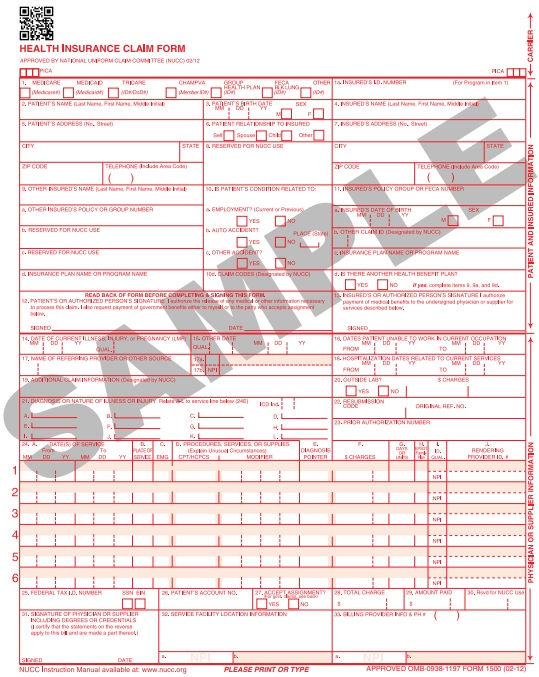
Build a “coding cover sheet” template you attach to each case (Dx list, primary CPT, secondary CPTs with justification, modifiers with reason, NCCI check result, devices, global period).
If you want, I can make a one-page cheat sheet and a fill-in coding cover sheet (Word/Excel) with dropdowns for common modifiers and a spot to paste op-note evidence.


Comments